
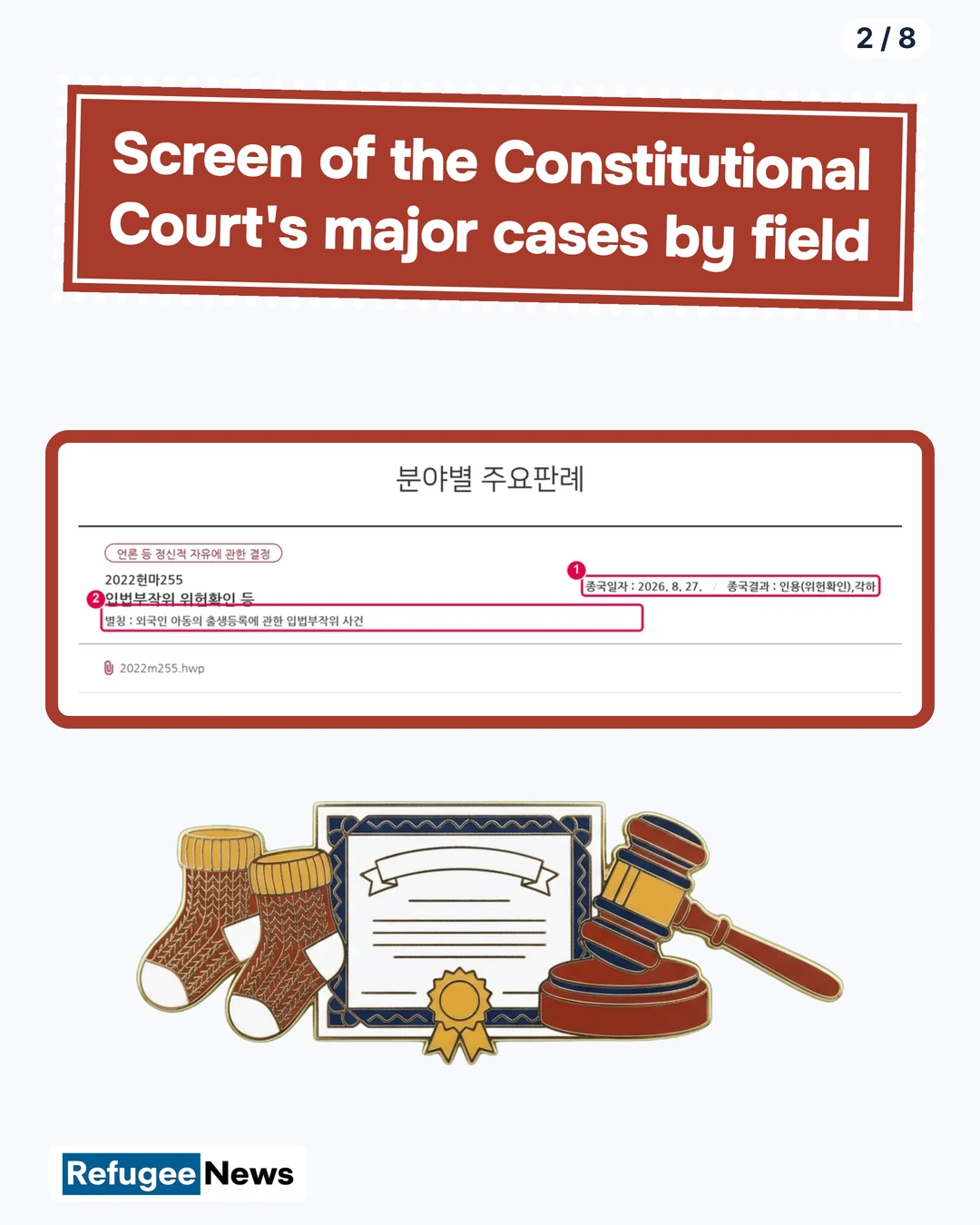
On 27 August 2026, the Constitutional Court of Korea (헌법재판소) decided that it is unconstitutional that no law provides for the birth registration of foreign children born in Korea. The case number is 2022Hun-Ma255, and the decision is published on the Korean Law Information Center (국가법령정보센터) and the Constitutional Court website.
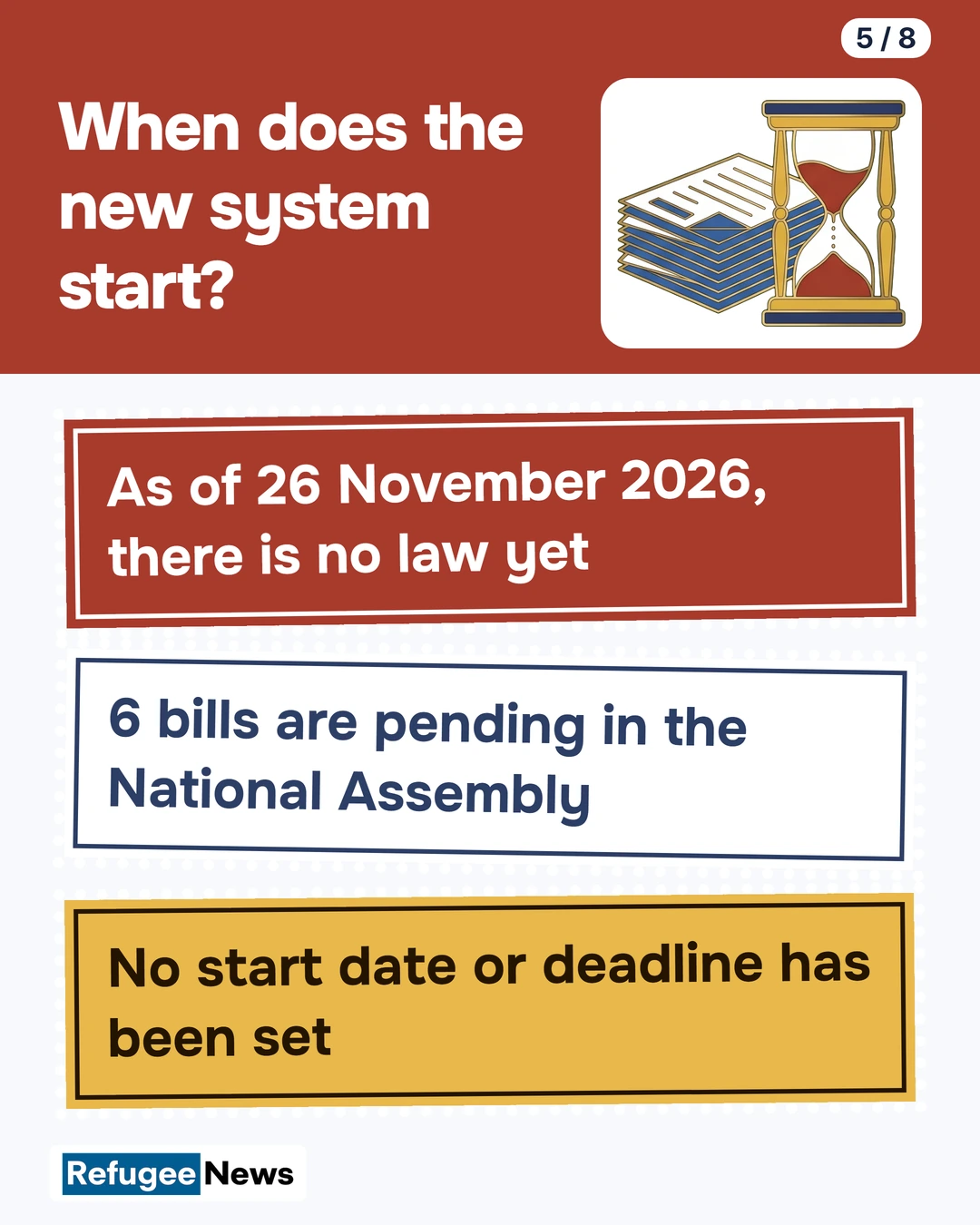
However, this decision did not create a new birth registration system right away. As of 26 November 2026, the law that would set it up has not been made yet. Foreign parents who have a child in Korea, including asylum seekers and humanitarian status holders, must still follow the existing procedure.
What the decision says
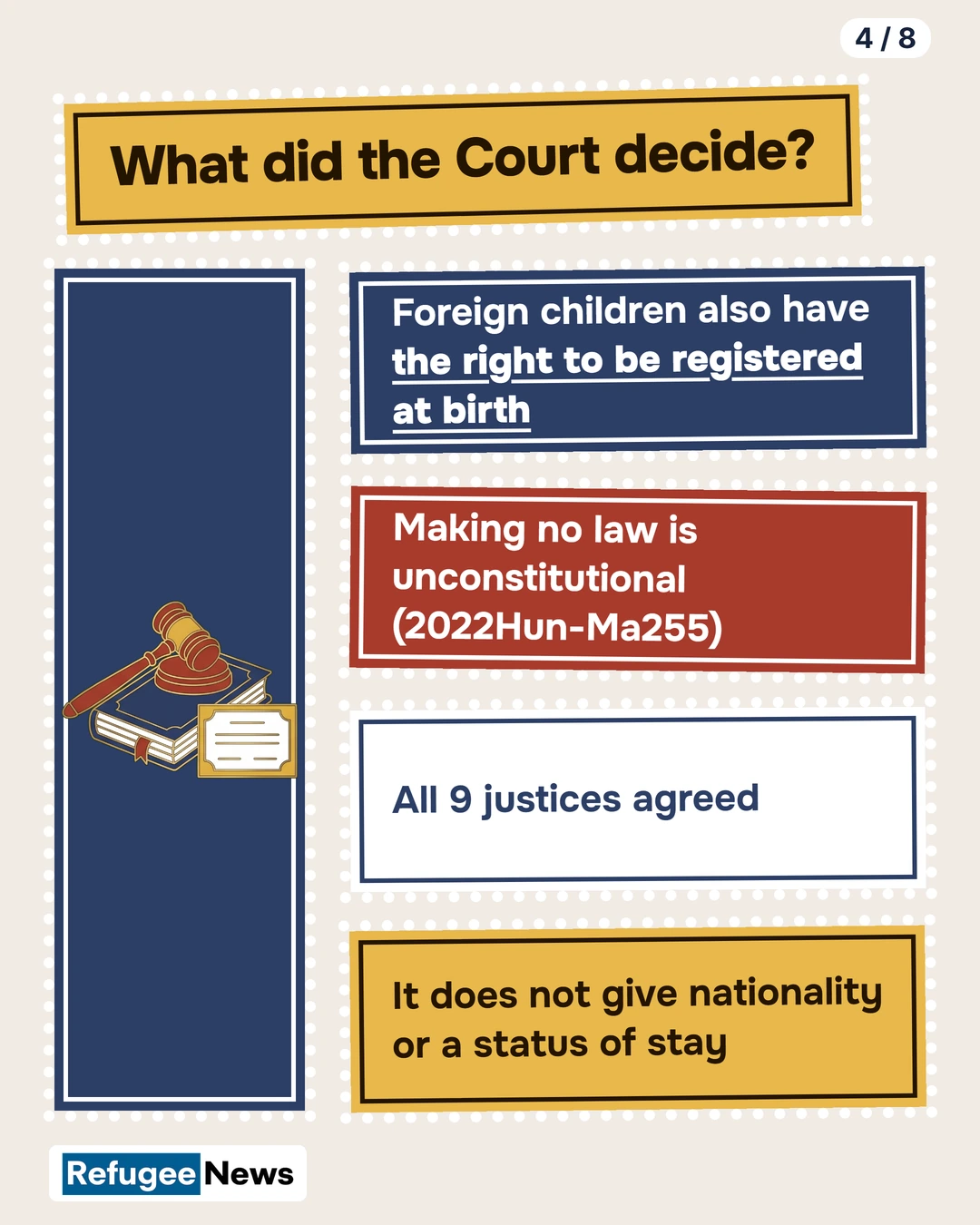
By the unanimous opinion of all 9 justices, the Constitutional Court judged that foreign children born in Korea also have the constitutional “right to be registered immediately after birth.” It therefore held that the National Assembly has a duty to create a system so that birth registration is possible under Korean law regardless of nationality, status of stay, or whether the birth was registered in the home country. The decision is that leaving this duty unfulfilled (a legislative omission) violates the rights of the child and is unconstitutional. The result is “upheld (confirmation of unconstitutionality).”
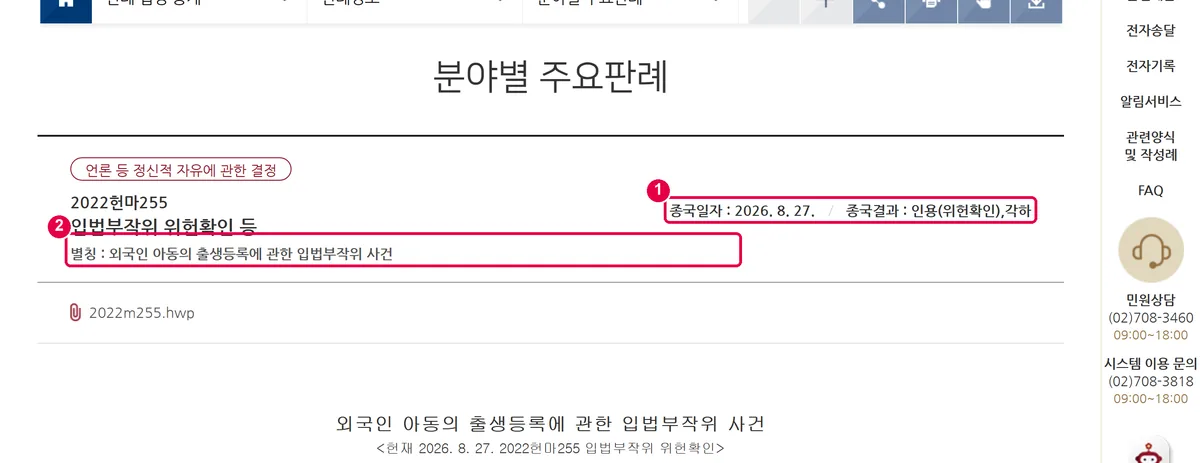
The reasons given in the decision are as follows.
- The family relation register of Korea covers citizens under Article 1 of the Act on the Registration of Family Relations, so a child without Korean nationality cannot have a birth registered through it.
- Alien registration is a system to manage entry and stay. The birth must first be registered at the home country’s embassy and nationality confirmed, so there is a time gap between the birth and alien registration. A child of foreigners for whom civil registration under the home country’s law is difficult, and a child whose parents are undocumented foreigners without a status of stay, cannot be registered as an alien.
- Birth registration is the first step in publicly proving that a child exists in Korean society. The Court held that even if benefits such as medical care or education are provided separately in each field, they cannot take its place, and the fact of a birth registration in the home country is not enough either.
This case was brought by a child of Vietnamese parents who was born in Korea in 2019 and could not have the birth registered under Korean law. According to the decision, the child’s birth was registered under Vietnamese law in 2020. In the same case, the father’s claim and the claim about education-related laws were dismissed because they did not meet the requirements.
Scope of this decision
Based on the decision and the explanation of the major case published by the Constitutional Court, the following are not part of this decision.
- The date the new system takes effect or a deadline for the National Assembly to make the law: The decision sets no such deadline. This decision is not a ruling of nonconformity to the Constitution that declares a law unconstitutional and ends its effect or sets a deadline for amendment. It confirms that the absence of a law is unconstitutional.
- Nationality or status of stay: The decision states that a birth registration system “in itself does not grant Korean nationality or a status of stay in Korea.” Birth registration and status of stay remain separate matters.
- Safeguards against enforcement: The decision pointed out that safeguards must also be prepared so that birth registration is not blocked because the person has no status of stay, and does not lead to enforcement of the Immigration Control Act. There is no law setting out these safeguards yet either.
Current state of the law
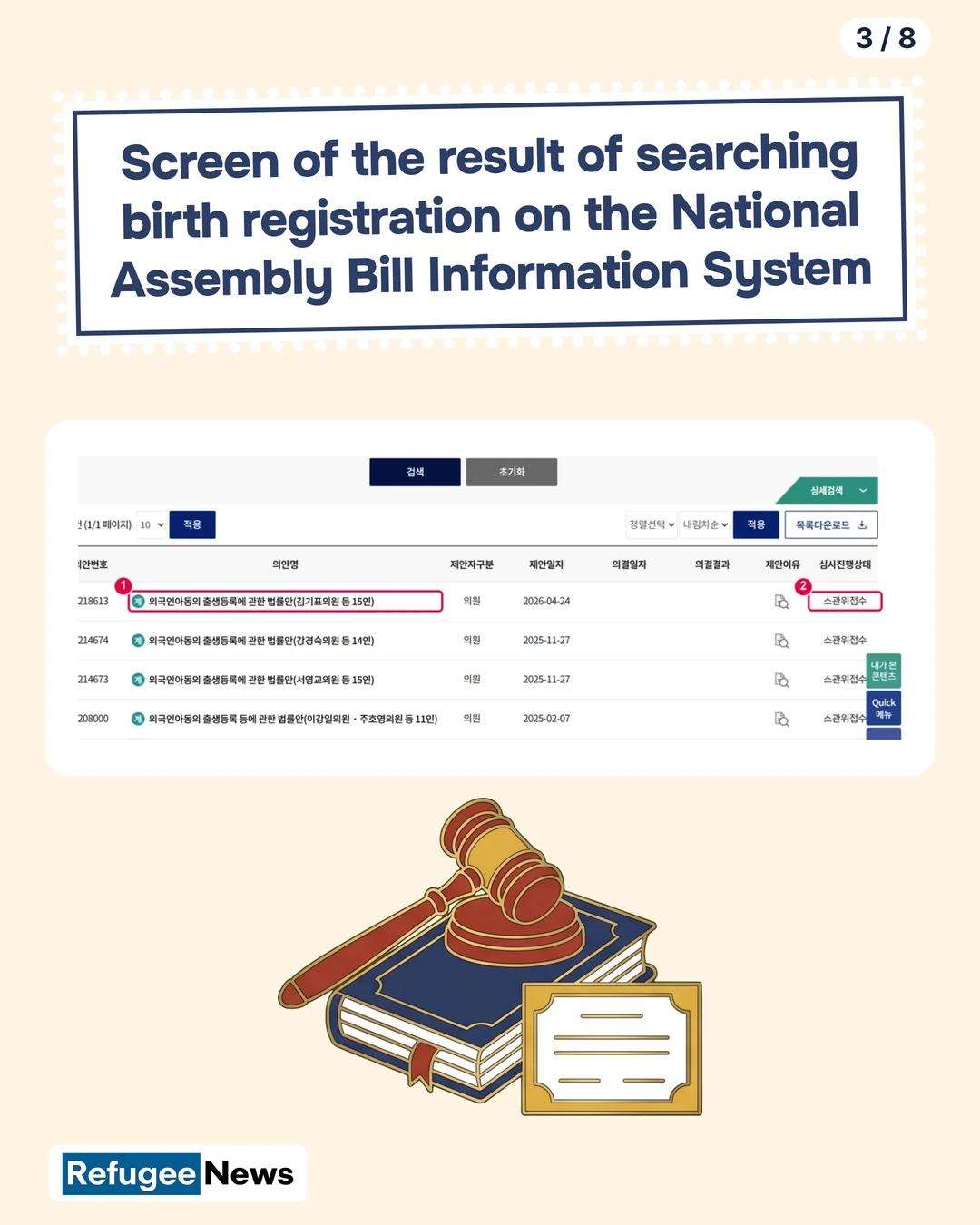
As of 26 November 2026, what the National Assembly Bill Information System shows is bills, not laws. In the 22nd National Assembly, 6 bills dealing with the birth registration of foreign children have been introduced, and all are pending. Of these, 5 have been received by the committee in charge. The other one, the Foreign Children Birth Registration Bill (2204526), was placed on the agenda and reviewed by the First Bill Review Subcommittee of the Legislation and Judiciary Committee on 29 April 2026, but no result of the handling has come out.
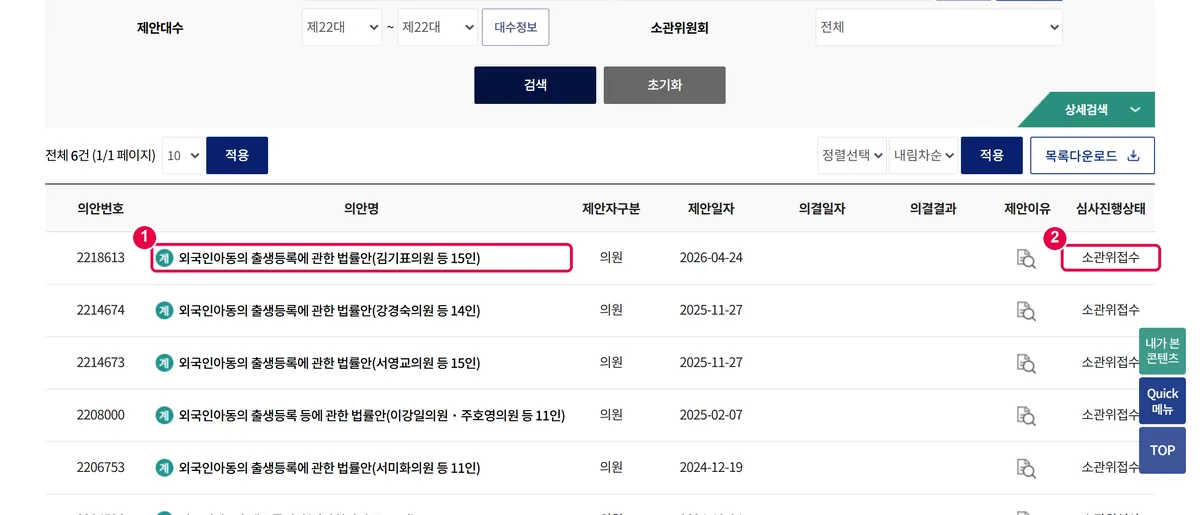
There is not yet a separate law on the birth registration of foreign children, and no effective date has been set. The contents of the bills may change, and it is not known when one will pass, so when a new system is created, check the official announcement then.
Current procedure
Until a new system is created, you must proceed under the current system. The whole process of your child’s stay and the steps after birth are covered in Administrative Procedures After Giving Birth in Korea and Are you New to Korea? Children and Family.
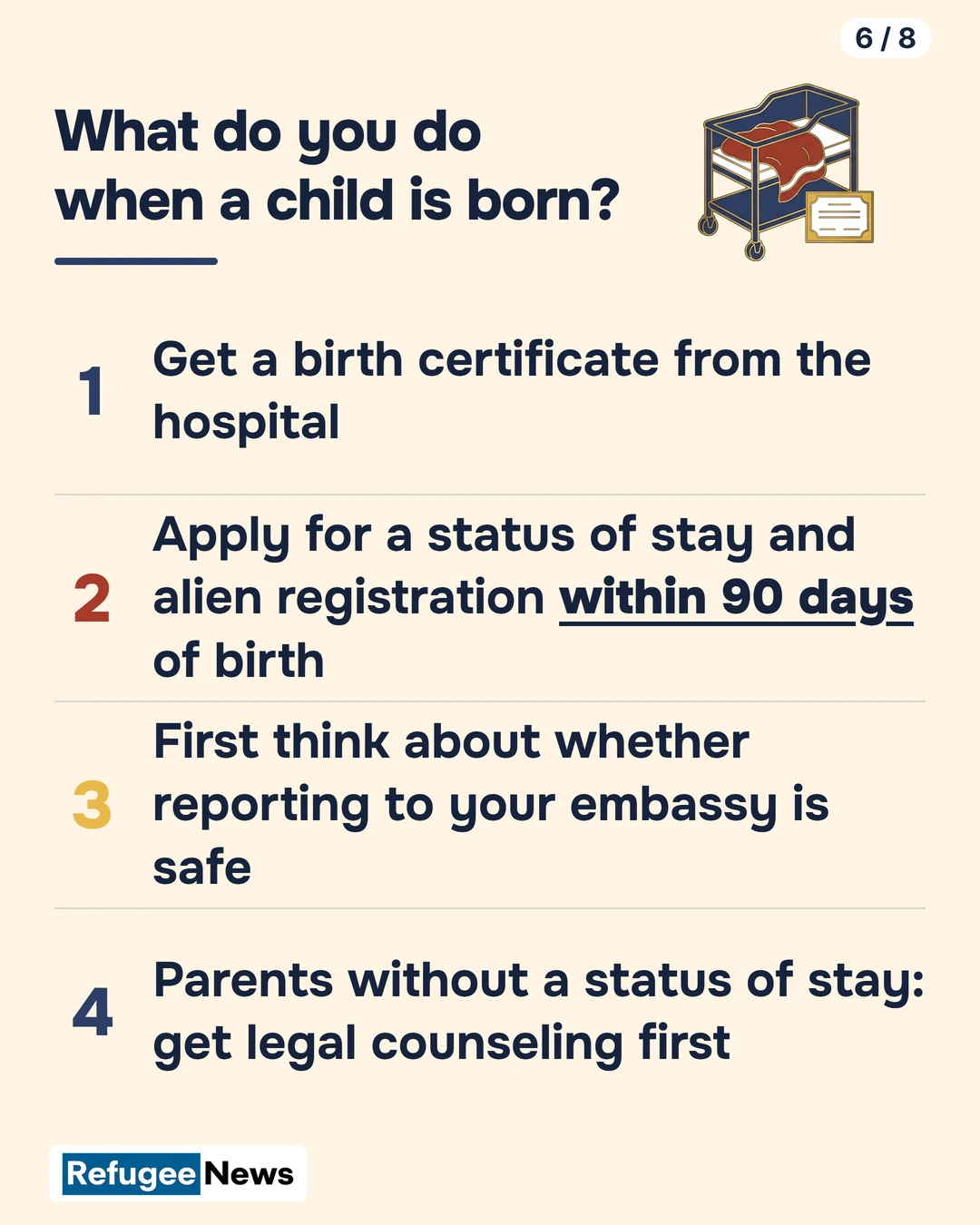
1. Get a birth certificate from the hospital.
When a child is born, the hospital issues a birth certificate (출생증명서, also called a birth fact confirmation). You need it for most later procedures, such as applying for a status of stay and reporting to your embassy, so keep it safe.
2. A foreign child born in Korea must apply for a status of stay and register as an alien within 90 days of the date of birth.
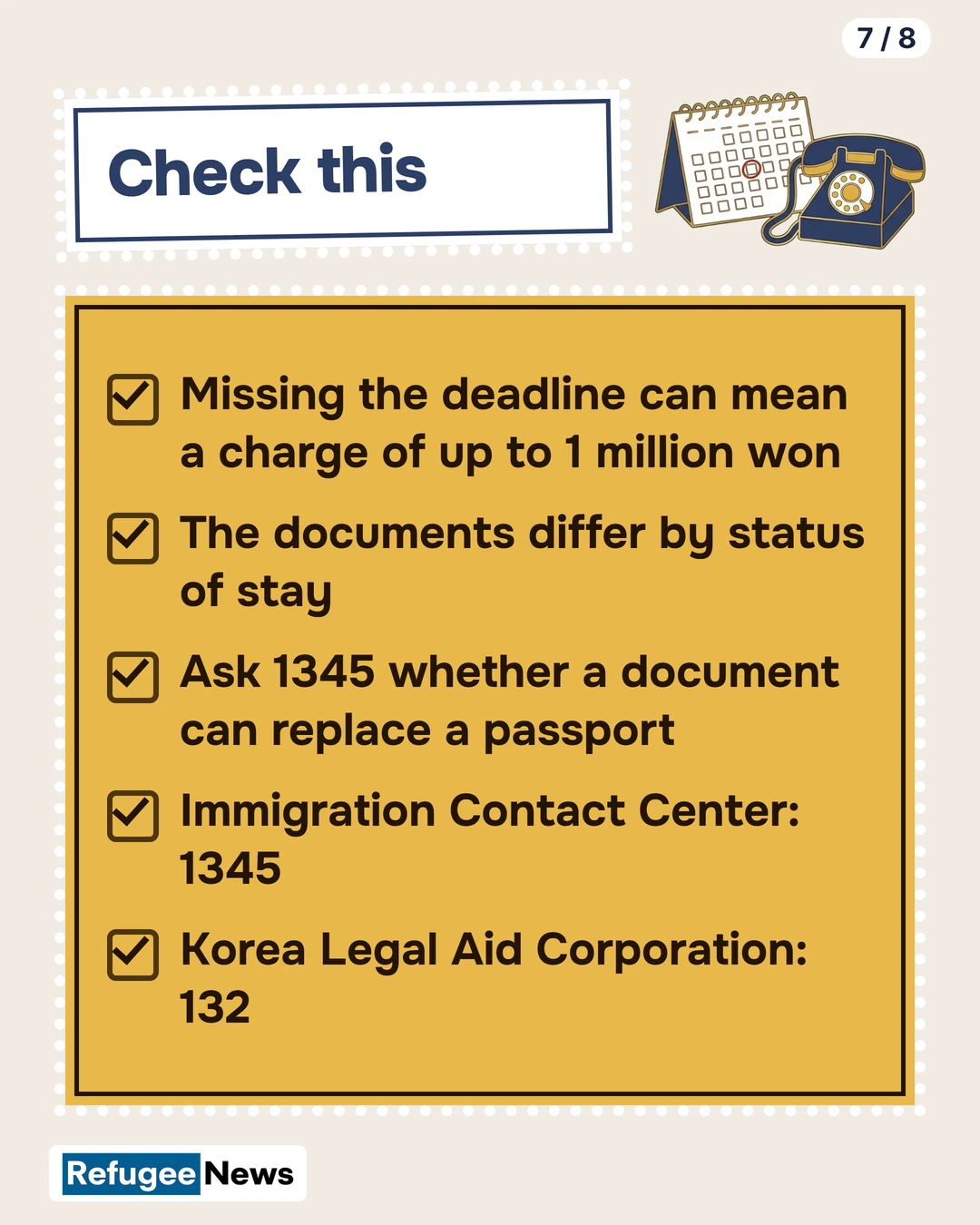
Article 23 of the Immigration Control Act provides that a foreigner born in Korea must get a status of stay within 90 days of the date of birth. If the child stays beyond 90 days, under Article 31 of the Immigration Control Act alien registration must also be done when the status of stay is granted. You apply at the Immigration Office (출입국·외국인청) with jurisdiction over where you live. The Ministry of Justice says in its Visa Navigator that a person who has a duty to apply may be charged up to 1 million won if this deadline is missed.
The documents needed differ by type of status of stay. Check on HiKorea or call the Immigration Contact Center (외국인종합안내센터) 1345. The status of stay that may be granted when a child of an asylum seeker (G-1-5) is born in Korea can be found in Guide to the Other (G-1-99) Status of Stay: Meaning, Difference from Asylum Seeker (G-1-5), Extension, Work, Health Insurance. The Immigration Office makes the final decision on which status of stay applies.
Related article: Integrated Application Form (Notification Form): How to Fill Out and Submit Foreigner Stay Petitions
3. Think first about whether it is safe to report to your embassy or consulate.
Foreign parents usually report the birth to the embassy of their home country, get a passport for the child, and use it for alien registration. However, for people who fled persecution, contacting the embassy of the home country can be dangerous. If it is hard or unsafe to go to the embassy, before you report, first ask 1345 or the Immigration Office with jurisdiction whether there is a document you can submit instead of a passport. Whether it is possible depends on the situation, and the Immigration Office makes the final decision.
4. If the parents have no status of stay or it has expired, get specialist counseling first.
The decision explains that a child whose parents have no status of stay currently cannot be registered as an alien. In this case, how to record and prove the child’s birth differs from family to family, and whether a violation of immigration law can lead to a disadvantage also differs by case. Before you go to the Immigration Office, get counseling from a legal organization that supports refugees or a public legal counseling organization.
- Advocates for Public Interest Law (APIL, 공익법센터 어필)
- NANCEN (Refugee Rights Center, 난민인권센터)
- Korea Legal Aid Corporation (대한법률구조공단) 132 (weekdays 9 a.m. to 6 p.m.; there are support criteria such as income)
Contact
- Immigration Contact Center (외국인종합안내센터): 1345 (questions about status of stay, alien registration, and a child’s stay)
- Immigration Office with jurisdiction: in-person counseling on applying for a status of stay and alien registration
- Korea Legal Aid Corporation: 132
- APIL and NANCEN: legal counseling for asylum seekers and recognized refugees
Reference links
- Constitutional Court of Korea, major cases by field: Case on the legislative omission regarding birth registration of foreign children (2022Hun-Ma255)
- Korean Law Information Center, Constitutional Court decisions: Confirmation of unconstitutionality of legislative omission, etc. (2022Hun-Ma255 decision)
- Constitutional Court of Korea, recent major decisions: 2021Hun-Ma975 (23 March 2023, the decision that first recognized the right to be registered at birth)
- National Assembly Bill Information System: Foreign Children Birth Registration Bill (2204526)
- Immigration Control Act, Article 23
- Immigration Control Act, Article 31
- Ministry of Justice Visa Navigator