Asylum & Status Where and with which documents asylum seekers (G-1-5), humanitarian status holders (G-1-6) and recognized refugees (F-2-4) file a marriage report when they marry a Korean national, the income, Korean language and housing requirements for Marriage Migrant (F-6) status, whether you can change your status of stay inside Korea, and where to ask, set out from the laws and Ministry of Justice manuals in force as of November 2026.
Guide November 21, 2026
Health & Medical At Public Health Centers in Korea, you can get an HIV test for free without giving your name. If you are confirmed to have HIV and register under your real name, the national and local governments cover your out-of-pocket payments for HIV-related care, and the 2026 guidelines of the Korea Disease Control and Prevention Agency (KDCA) include undocumented foreigners without health insurance, and asylum seekers, among those eligible for support. This guide explains the confidentiality of test results, how HIV relates to your stay, the rules for bringing medication from abroad, and where to get help, based on the law and official guidance.
Guide November 21, 2026
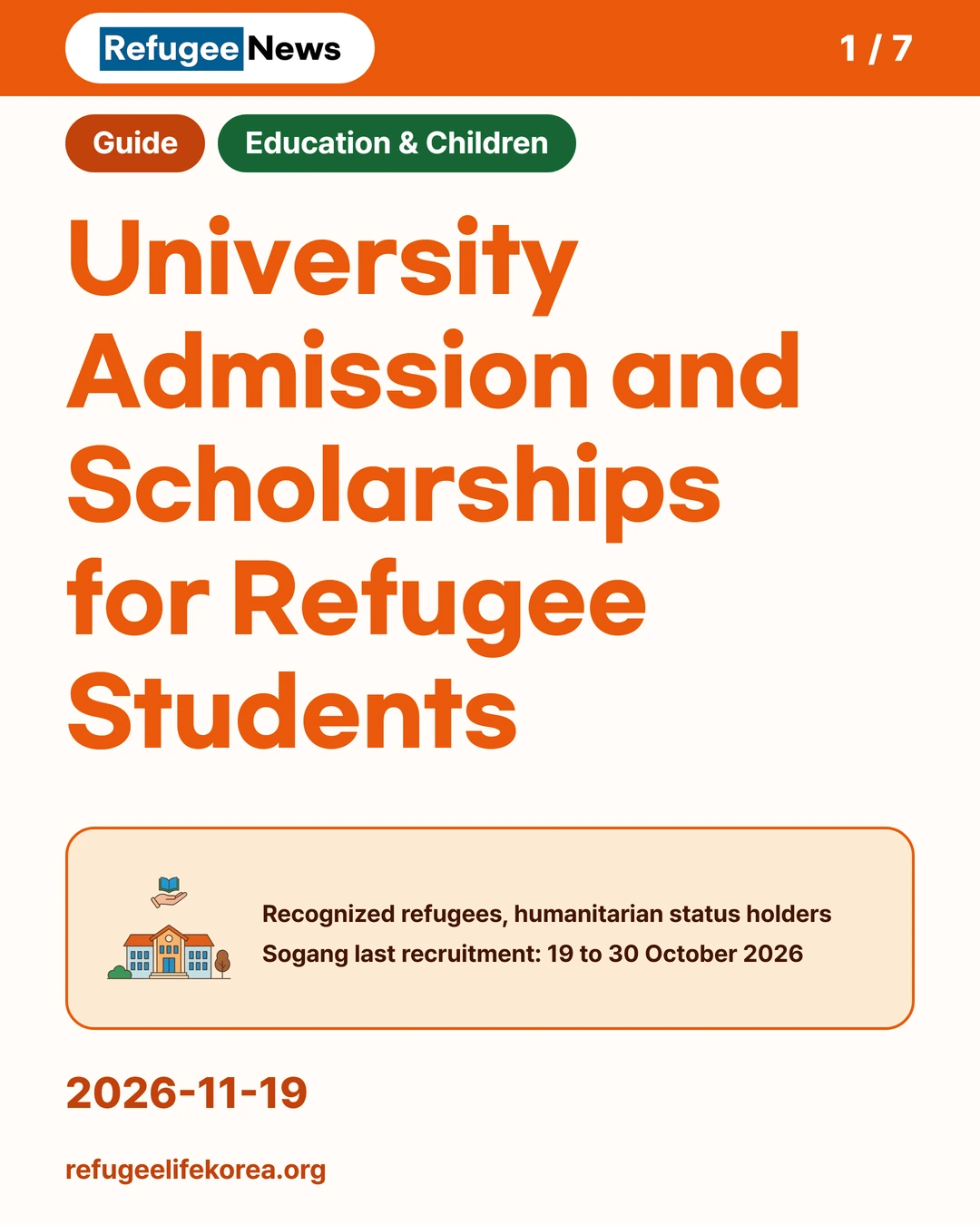
Education & Children A guide for parents and families raising children. It brings together, in one place and by status of stay, information on pregnancy and childbirth, your child's status of stay, daycare centers and kindergartens, school admission, going to university, your child's physical and mental health, and how to live together with your family.
Guide November 21, 2026
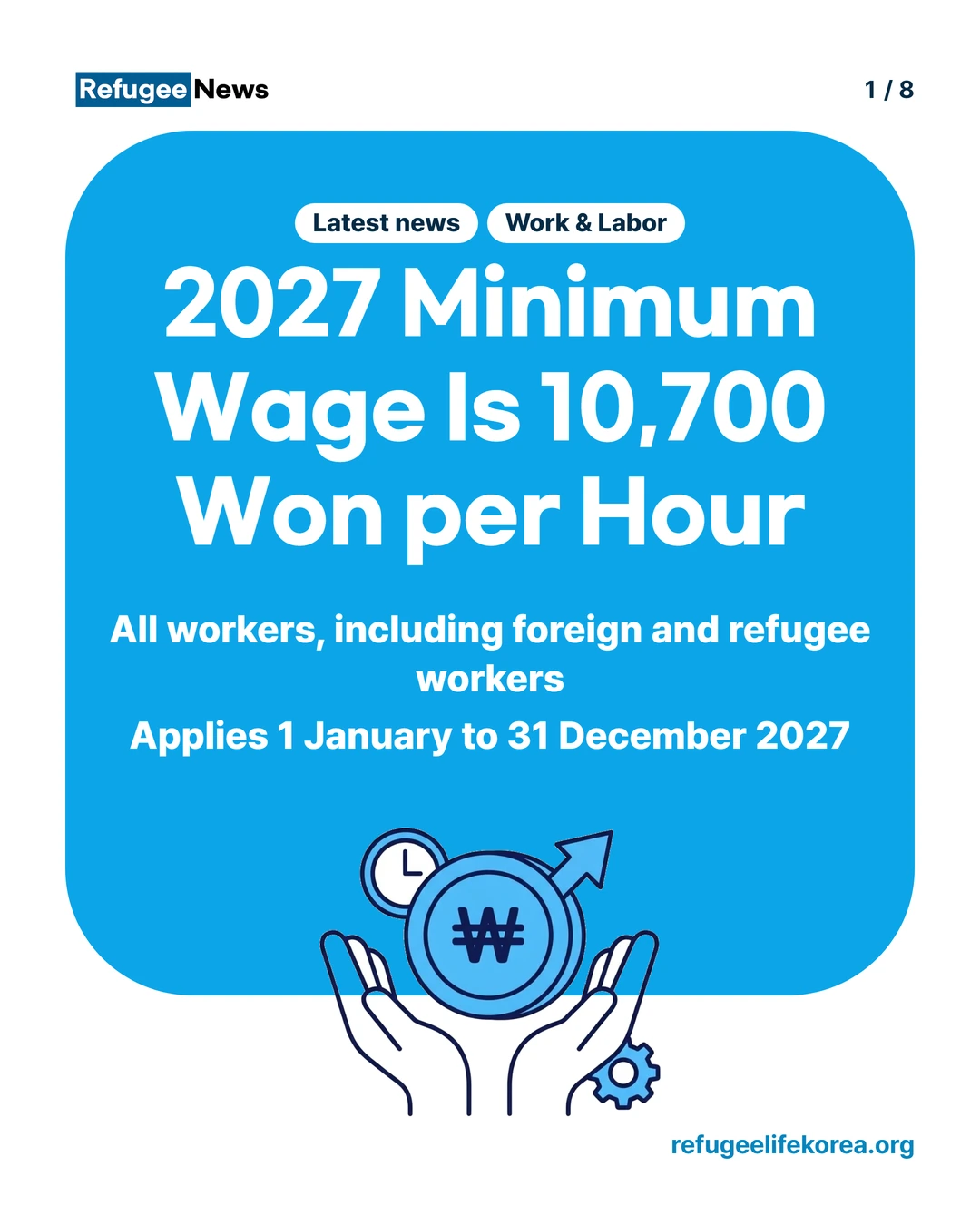
Work & Labor The Ministry of Employment and Labor has officially announced the minimum wage for 2027 as 10,700 won per hour (2,236,300 won per month when converted). It applies from 1 January to 31 December 2027, and until 31 December 2026 the current 10,320 won still applies.
ExpiredDeadline 12/31 November 19, 2026
Health & Medical Vaccination (getting a vaccine) is a way to build immunity against a specific disease without actually catching it.
Guide UpdatedNovember 19, 2026
Health & Medical The Korea Disease Control and Prevention Agency (KDCA) runs the 2026-2027 national COVID-19 vaccination from 12 October 2026 to 30 June 2027 for people aged 65 and over, people with weakened immune systems, and residents or patients in high-risk facilities. This guide covers whether foreigners can be vaccinated, what to bring, and how to book.
Dated ExpiredDeadline 06/30 UpdatedNovember 19, 2026
Korean Language The Online King Sejong Institute is a free service open to any foreigner who wants to learn Korean, and Level 0 of the Korea Immigration and Integration Program (KIIP) is free. Family Centers and local government foreign resident centers also offer Korean classes, and who can join and what it costs differ by organization.
Guide November 19, 2026
Asylum & Status There are three main statuses of stay connected to the refugee process in Korea.
Guide UpdatedNovember 19, 2026
Rights & Law Resident tax (주민세, juminse ) is a local tax that foreigners must also pay every year once one year has passed since the date of their Alien Registration.
Guide UpdatedNovember 19, 2026