
The refugee recognition of an F-2-4 recognized refugee may be cancelled or withdrawn if there are grounds set by law. The decision is made by the Minister of Justice, and a person who receives the notice can contest it by an objection and a lawsuit. The status of stay and deportation are governed by provisions separate from refugee recognition.
Related articles: G-1 Visa and F-2 Visa comparison, Refugee application procedure and how to file an objection or administrative litigation if you are not recognized
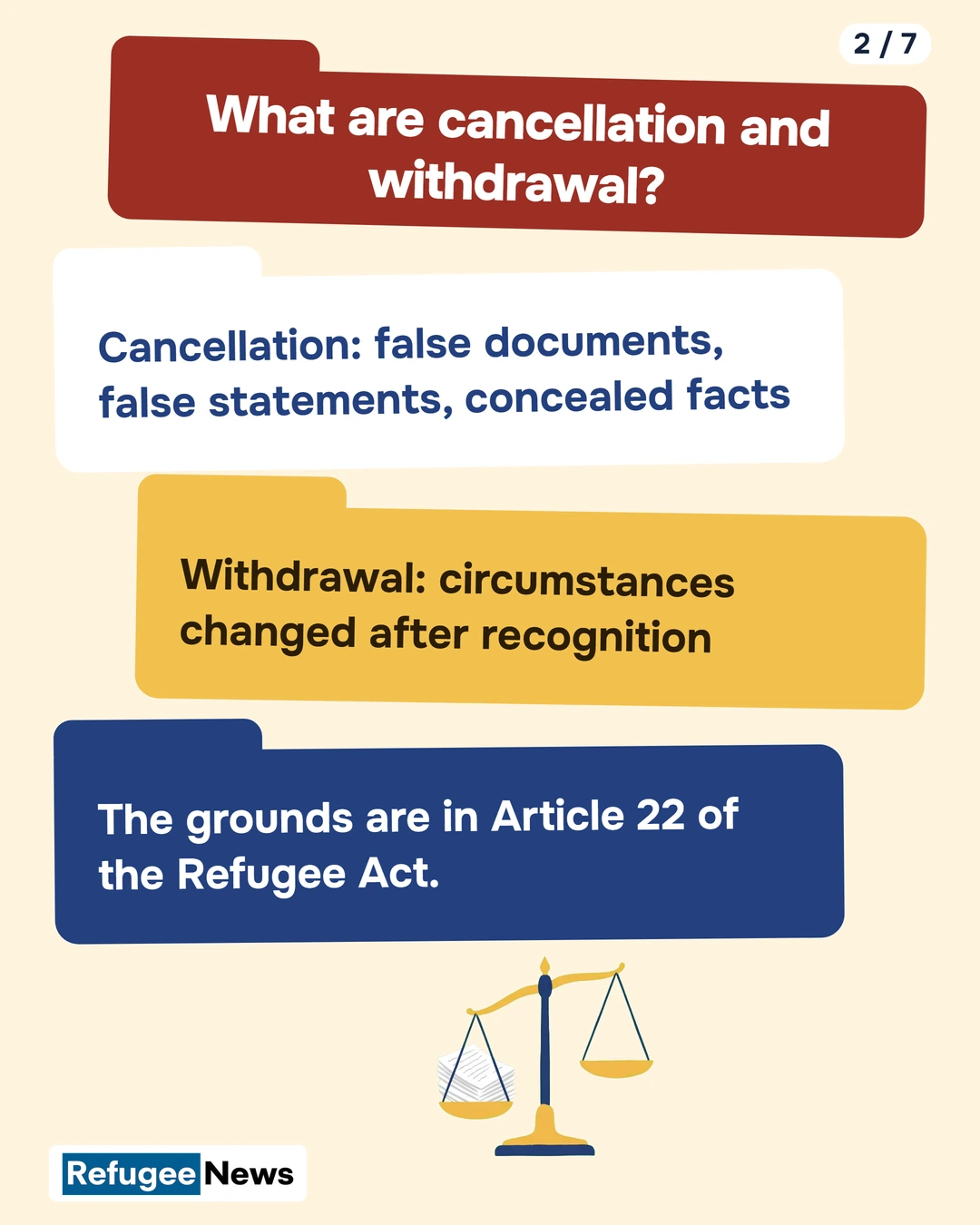
What Are Cancellation and Withdrawal of Refugee Status?
Cancellation (취소) applies when it turns out that the decision to recognize refugee status was based on the submission of false documents, false statements or the concealment of facts (Refugee Act Article 22, Paragraph 1). The Ministry of Justice commentary (2014 edition) explains that cancellation has the effect of voiding the refugee recognition from the beginning, and that even when the requirements are met, the Minister of Justice only has “discretion to cancel” and is not required to cancel (Ministry of Justice commentary).
Withdrawal (철회) applies when circumstances change after refugee recognition, and Article 22, Paragraph 2 of the Refugee Act sets out six grounds. The commentary explains that withdrawal has the effect of ceasing to apply the status of a recognized refugee for the future. The grounds include the following: the person is again voluntarily availing himself or herself of the protection of the country of nationality; the person has regained or newly acquired a nationality; the person has voluntarily re-established himself or herself in the country that he or she left for fear of persecution; and the grounds on which refugee recognition was based have ceased to exist.
The text of Article 22 does not list time spent abroad, criminal punishment or the status of family members as grounds. The UNHCR Handbook says that the grounds for withdrawal must be interpreted restrictively (paragraph 116) and that a mere temporary change in the facts is not sufficient (paragraph 135). If you apply again after a cancellation (취소) without a material change of circumstances, part of the examination procedure may be omitted (Refugee Act Article 8, Paragraph 5).
Notice and Objection
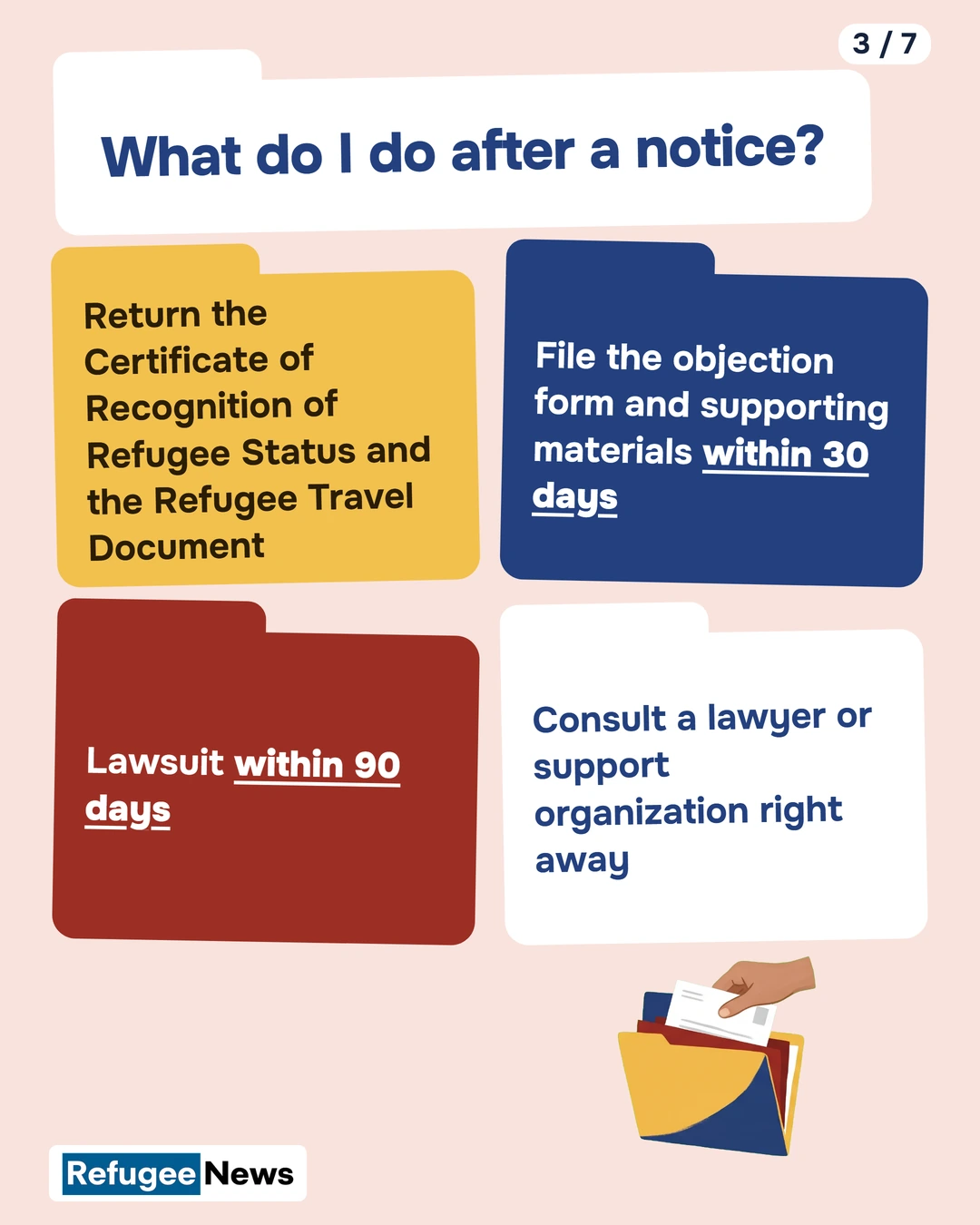
The Minister of Justice must state in the notice the grounds for the cancellation or withdrawal and that an objection can be filed within 30 days (Refugee Act Article 22, Paragraph 3). When you receive the notice, you must return the Certificate of Refugee Status Recognition and the Refugee Travel Document without delay to the head of the Immigration Office with jurisdiction over you (Immigration Act Article 76-6, Paragraph 1).
- You must submit the objection form and supporting materials to the head of the Immigration Office with jurisdiction over you within 30 days from the day you receive the notice (Refugee Act Article 21, Paragraph 1).
- When the period is counted, the first day is not included, and if the last day is a Saturday or a public holiday, you can submit until the next day (Civil Act Article 161).
- The Minister of Justice must decide within 6 months of the day the objection is received, and when unavoidable may extend this by up to 6 months (Refugee Act Article 21, Paragraph 7).
- If you file an objection, you cannot request an administrative appeal (행정심판), but you can file administrative litigation (Refugee Act Article 21, Paragraph 2).
- If your place of residence changes, you must report it within 15 days (Immigration Act Article 36).
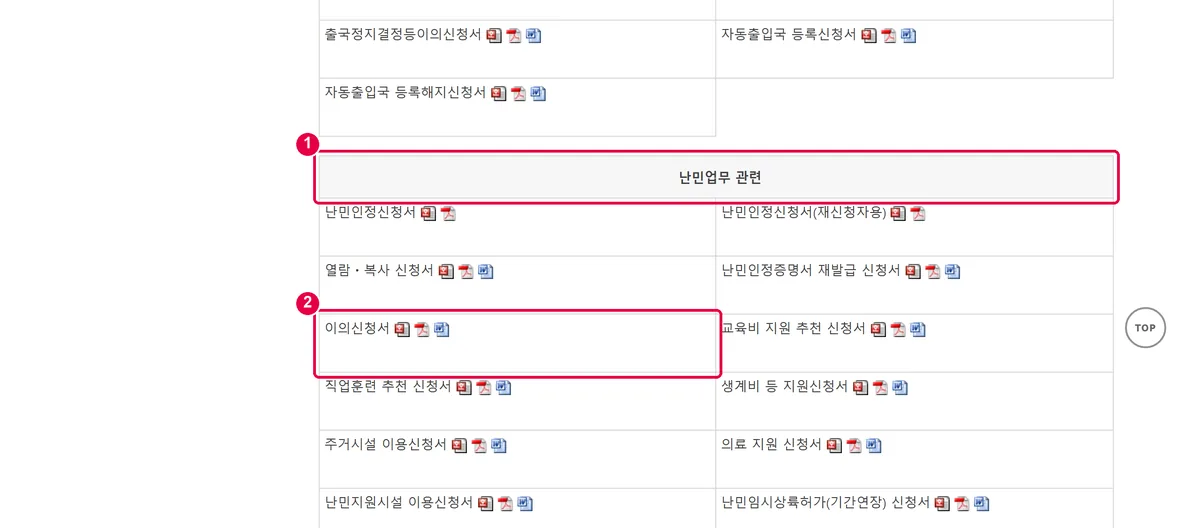
- In the 뉴스·공지 (News and Notices) → 민원서식 (Civil service forms) list, find the 난민업무 관련 (Refugee affairs) box.
- Press the file icon next to 이의신청서 (Objection form) in that box to download it.
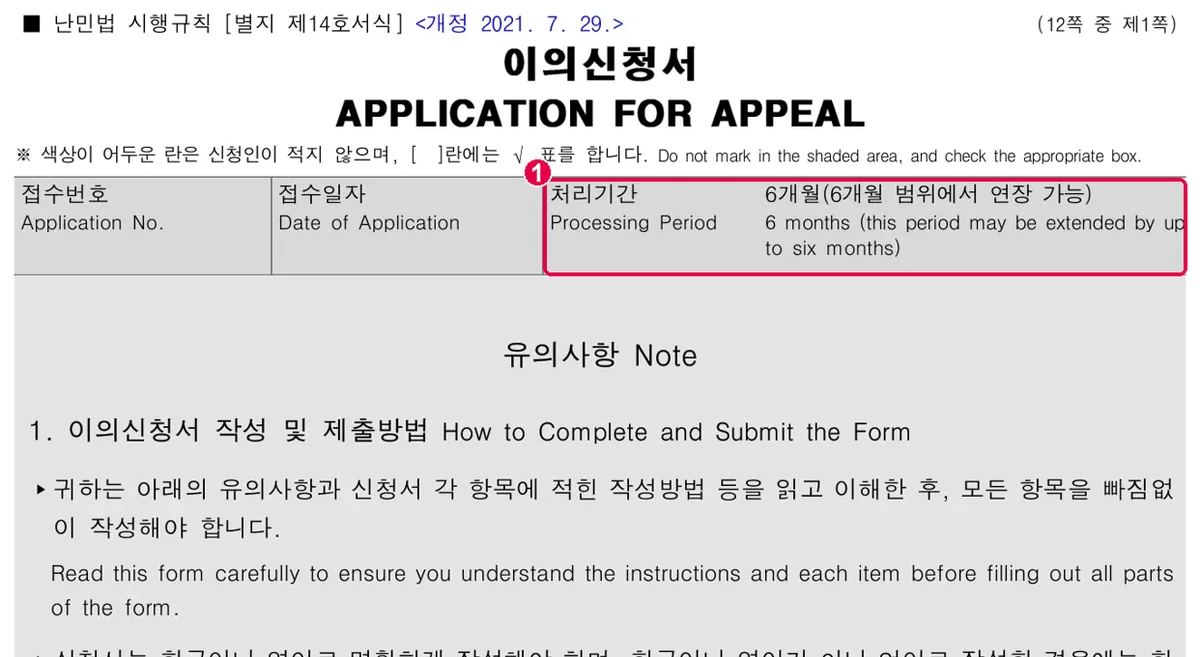
- On the 처리기간 (Processing time) line of the objection form (Enforcement Rule of the Refugee Act, Annex Form No. 14, revised 29 July 2021, page 1 of 12), "6 months (may be extended within a range of 6 months)" is written. This is a blank form.
The Ministry of Justice guide explains that a person who files an objection can stay in Korea until the procedure ends but must obtain a separate permission to stay. You apply for an extension of the period of stay from 4 months before it expires until it expires, and you submit the receipt for the objection (Ministry of Justice objection guide).
Administrative Litigation
A suit to revoke the disposition (취소소송) must be filed within 90 days of the day you learned of the disposition. It cannot be filed once 1 year has passed from the day of the disposition, except where there is a justifiable reason (Administrative Litigation Act Article 20).
According to the Ministry of Justice guide, the lawsuit is directed at the original disposition, the cancellation or withdrawal of refugee recognition. If the objection was rejected, you file it against the head of the Immigration Office that made the disposition within 90 days of the day you receive the notice of the rejection decision. If the objection is dismissed as inadmissible, the lawsuit may be dismissed for missing the filing period. You must confirm the deadline with a lawyer.
To request an administrative appeal without filing an objection first, you must do so within 90 days of the day you learned of the disposition and within 180 days of the day of the disposition (Administrative Appeals Act Article 27).
F-2-4 Status of Stay
The Refugee Act has no provision that sets out what happens to the F-2-4 status of stay when refugee recognition is cancelled or withdrawn. Under Article 89, Paragraph 1 of the Immigration Act, a permission to stay may be cancelled, for example, when the permission was obtained by false or improper means, when a condition of the permission was violated, or when a serious ground arises, such as a change of circumstances, so that the permitted status can no longer be maintained (Immigration Act Article 89).
What happens to your status of stay after you receive a notice of cancellation or withdrawal must be confirmed in writing, from the notice and from the Immigration Office with jurisdiction over you.
Visits to the Home Country and the Home Country Passport
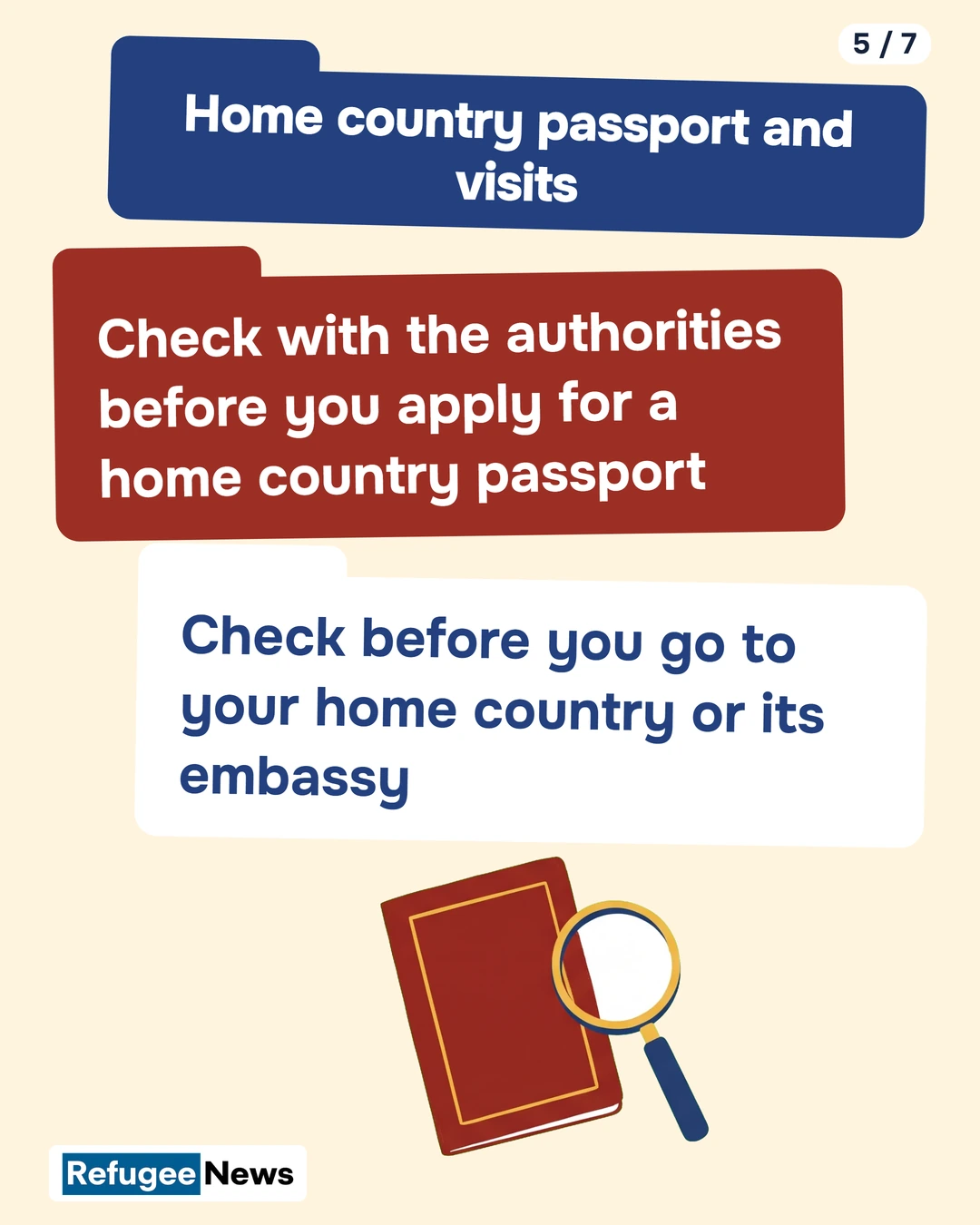
I could not find a Korean Ministry of Justice standard that treats a visit to the home country or the use of a home country passport as a ground for withdrawal. Before you apply for or renew a home country passport, and before you go to your home country or its embassy, you must check with the authorities.
The UNHCR Handbook is non-binding guidance and describes the positions of some countries (UNHCR Handbook).
- Paragraph 119: To find that a person has again availed himself or herself of the protection of the country of nationality, voluntariness, the intention to obtain protection and the actual receipt of protection are all required.
- Paragraph 121: If you apply for or renew a home country passport, it is presumed, unless there is proof to the contrary, that you intend to avail yourself of the protection of the country of nationality. Obtaining documents such as a birth certificate or a marriage certificate does not fall under this.
- Paragraph 134: A short visit made with a travel document issued by the country of residence, not a home country passport, and without the intention of permanent residence is not re-establishment.
A Refugee Travel Document is valid for 3 years, and its holder does not need to obtain a re-entry permit when entering (Immigration Act Article 76-5). If it is recognized that the person may harm safety, it may not be issued, or the person may be ordered to return it.
Crime and Deportation
An F-2-4 recognized refugee is not a permanent resident, so a person who is sentenced to imprisonment without work or a heavier punishment and is released may become subject to deportation (Immigration Act Article 46, Paragraph 1, Item 13). Acts punished in Korea are described in Korean laws and penalties that foreigners and refugees need to know.
A recognized refugee is not returned against his or her will to a country where he or she may be persecuted (Refugee Act Article 3).
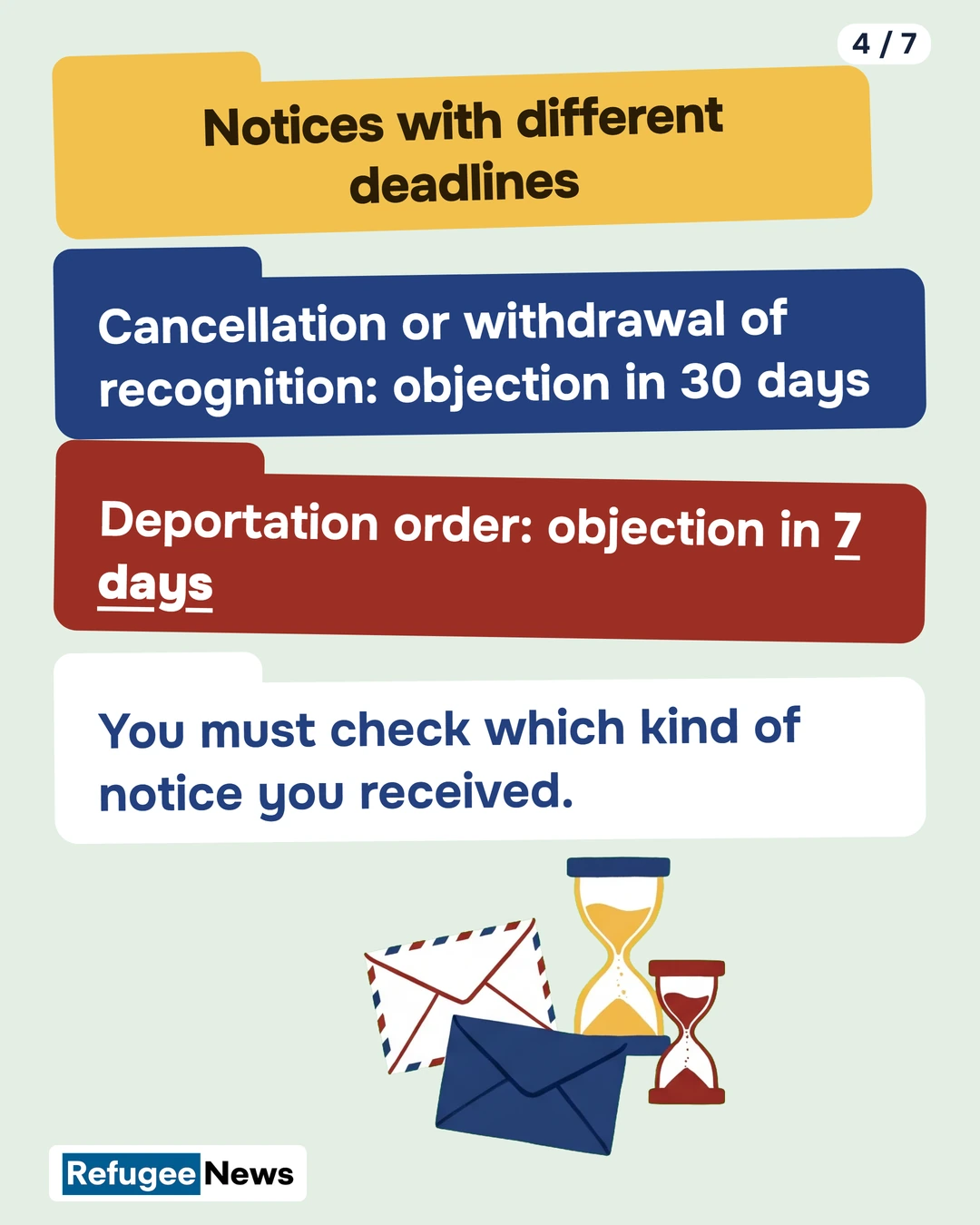
An objection to a deportation order must be filed within 7 days of the day you receive the order (Immigration Act Article 60). This differs from the 30 days for an objection to cancellation or withdrawal of refugee recognition, so you must check which kind of notice you received. Even when the objection of a recognized refugee is found to be without merit, the Minister of Justice may permit the person to stay (Article 76-7). This is a provision that the Minister may grant permission, and permission is not guaranteed.
Humanitarian Status Holders (G-1-6)
G-1-6 is extended 1 year at a time. The Refugee Act has no separate provision on the cancellation of a humanitarian stay permit, and the Ministry of Justice commentary explains that cancellation or withdrawal is possible by analogy with Article 22 of the Refugee Act. The “Legal Support Manual for Refugee Cases” (2024) presents, as the grounds in the Refugee Work Guidelines for refusing an extension, false documents or false statements, a change of circumstances in the home country that makes return possible, and other cases in which the Minister of Justice judges that there is no need to permit humanitarian stay (Manual, p. 92).
Family
Article 22 of the Refugee Act is a provision about the decision on the person who received refugee recognition, and it does not say that the status of family members changes together with it. The same manual (p. 182) explains that family formed before the date of the refugee recognition decision receives refugee recognition or F-2-4 through family reunification, and family formed after the date of the decision receives visiting and cohabiting status (F-1-16). I could not confirm from the provisions what effect a cancellation or withdrawal for the principal applicant has on the status of stay of family members, so you must check with the Immigration Office with jurisdiction over you.
Legal Consultation
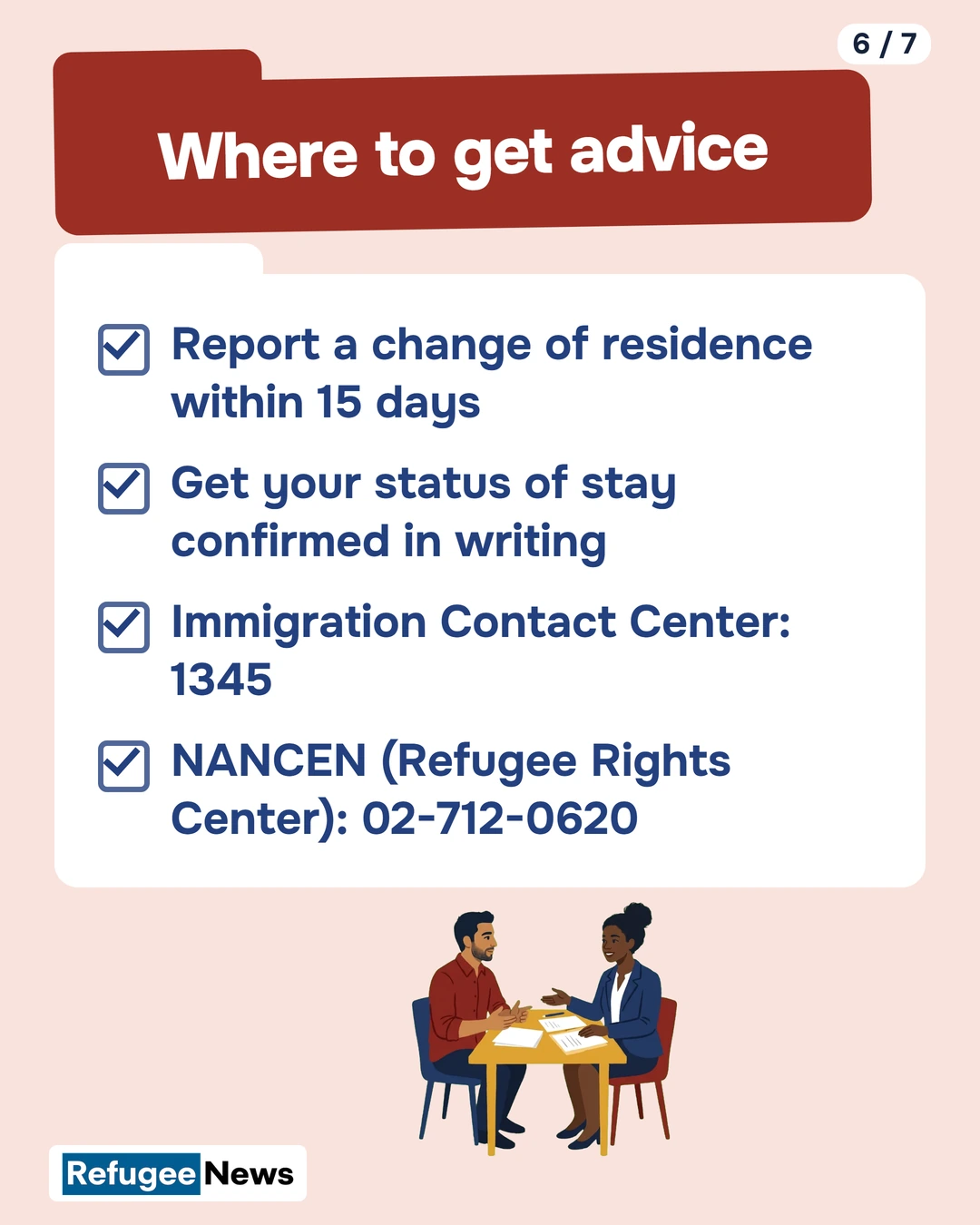
- Immigration Contact Center 1345: weekdays 09:00 to 22:00. After selecting the consultation language, you can request the “Village Lawyers for Foreign Nationals” (외국인을 위한 마을변호사) legal consultation (Korea Immigration Service guide).
- NANCEN (Refugee Rights Center): 02-712-0620, consultations on Wednesdays from 10:00 to 17:00 (except 12:00 to 13:00) (NANCEN).
- Advocates for Public Interest Law (APIL): you must check on the website how to request a consultation.
Laws and deadlines may change, so before you apply you must check the latest information with 1345 or the Immigration Office with jurisdiction over you. General legal information is in Guide to Korean laws, immigration and courts for refugees and migrants.