
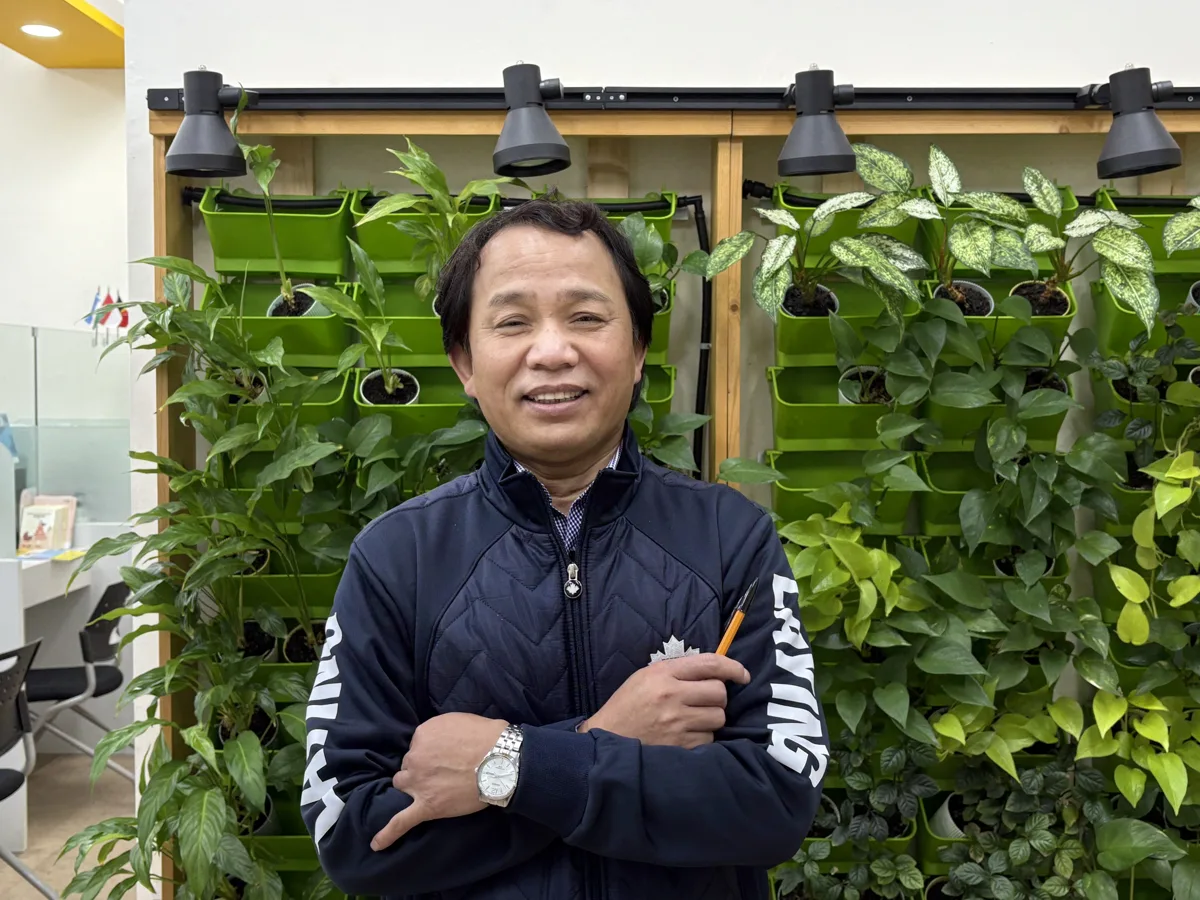
Ronel Chakma Nani (Lee Nani) is a Jumma, a member of an ethnic minority from the Chittagong Hill Tracts region of Bangladesh. He came to Korea to escape persecution for his work on minority human rights, was recognized as a refugee in 2002, and has since acquired Korean nationality; he now provides settlement counseling for migrants in Gimpo. Continuing his work with the Jumma Peoples Network-Korea, he says he wants to live “as a Jumma who is also Korean, and a Korean who is also Jumma.”
This article arranges an interview MAP Refugee News conducted on 30 November 2024 as questions and answers. The answers give Lee Nani’s words as he said them, with some parts shortened for length.
Coming to Korea
Could you start by telling us how you came to Korea?
I first came to Korea in 1993. Back then I went to India first. I was doing human rights work for ethnic minorities, got arrested, and after three years of trial I was released, found not guilty. After that I finished my plans and went to India. From India I went through several countries, Thailand, the Philippines, and came to Korea.
As you know, the Jumma people are ethnic minorities in Bangladesh; originally there were 13 peoples, and through merging there are now 11. Especially in the Chittagong Hill Tracts region, we had a different identity in language, culture, religion and politics. Fleeing government persecution, it was not just me, it was everyone. In the Tripura region of India there were about 65,000 refugees too, and at that time many people fled to various countries, and I was one of them; in effect I came to Korea in exile in early ‘94. In ‘98 I went back, because in ‘97 a peace accord was signed between the Bangladesh government and the party.
So have you been in Korea the whole time since ‘98?
No. I came back to Korea in 2000. The peace accord was not being implemented, so overall the situation and the human rights situation had not changed. Since I came to Korea then, I have stayed in Korea.
Becoming a Recognized Refugee
Could you tell us about when you first settled in Korea?
Speaking from the 2000s, in 2001 I applied for refugee status. At that time there were many illegal residents. You could say most were undocumented. There was no employment visa system either; at that time there was the industrial trainee system, but it was run on a somewhat limited basis. Back then I lived no differently from other foreign workers. No holidays, doing illegal work, going through different companies, not getting paid, not being treated fairly; I lived just like a worker.
I was recognized as a refugee in 2002. The process before being recognized as a refugee is the hardest. There was no Refugee Act either, and immigration has handled it from long ago, but immigration was strict back then. Now there is a range of support for refugee applicants; after I applied for refugee status, various good systems were created, right? Better than nothing, the good among the bad. If you did part-time work you had to report it to immigration, but if you reported it to immigration, they would actually tell the workplace that refugee applicants are not allowed to work. I understand immigration’s position too. There was no work permit, so it was a difficult situation at that time. Not just me, most refugee applicants were probably in the same situation. After I was recognized as a refugee, I could work legally and get a job legally; there was that change.
It has been more than ten years since the Refugee Act was made. Do you think there have been changes in that time?
You cannot say there has been no change, but while the law changed, people’s hearts did not change. Ordinary citizens, staff at agencies, they have not changed much.
Childhood in the Chittagong Hill Tracts
Could you also tell us about your childhood in the Chittagong Hill Tracts?
Bangladesh was born in 1971, and I have explained the situation after that a lot: the human rights of the Jumma people were completely ignored, the government deployed the army, and because they were not recognized, the Jumma people formed a party and entered into armed struggle. At that time all sorts of problems arose, and I experienced them directly. Soldiers raiding village after village and beating villagers, and the settlers, the Bengalis, the migrants, taking land and shops; I saw it with my own eyes.
The stories from when I was in elementary school, from my very early childhood, were different again. During the great famine, too, many people died. The Hill Tracts, a mountainous area, were not affected much. Fruit grew on the trees and there was a lot of wild yam and the like, and the famine had its effect, so there was a song that went, if you go to the mountains there are many holes where people dug for yams. There was that kind of time, and it is a story about how people lived on yams back then.
While things like that happened, there were also many fun times. When I watch old Korean dramas, it brings back a lot of memories of that time; it was peaceful then. It was a peaceful time, and after school, if you went to the mountains, there were lots of snacks. The country is hot, right? Around 4 or 5 o’clock it gets cool. From then on we played all kinds of traditional games until night. At some point that disappeared. Soldiers going around the villages at night raiding them, raiding the villages of Bengali migrants, with things like that, at some point the peace was gone. I could feel the situation gradually getting worse. As those things happened, families were scattered, poor people got poorer, and some people became rich.
Because of this and the activities I had been doing, there was a party that was fighting, and I joined it at a young age and was active, then was arrested by the army. I wrote in a book about why we had no choice but to fight, and I think that is why the book did not sell much. Because what I wanted to convey to Korea through the book was not the refugee, but the stage before becoming a refugee. Korean people are not curious about why someone became a refugee. I, on the contrary, wrote that before being a refugee I was an activist, I was a Jumma, I was a minority, I was a victim, but the readers and I thought differently.
A Heart That Helps and a Heart That Lives Together
Korean society pays attention when you say you are struggling, but seems less interested when you say “let us live together.” Can Korean society change too?
Not entirely, but I think that is the process of change. I have lived about 26 years as a migrant and as a refugee, and I have never seen anyone who disliked me. Everyone I met was supportive. “They came to our country, so we should help them. We should be with them; foreigners are struggling, so we should help them.” But it seems they do not actually put it into action. When society sees marriage migrants or foreigners, it sees them as poor, struggling, a class of people to be supported, right? That is a prejudice. The heart that helps is well developed, but the heart that lives together is very lacking.
In your book we saw the word “maleya.” How is it realized in your life?
That is a Chakma term. I think other peoples have it too. In Korea there is a culture where people with economic means help people who are struggling, right? That is maleya, but the difference with maleya is that the rich and the powerful can also receive help from the weak and those without money. It is giving and receiving help from each other. Not only me helping you, but you helping me too. That is the kind of culture it is.
We had that in our day. Once a house made of bamboo collapsed because of a typhoon, and the villagers came and fixed the house together in a single day. In the same way, when a harvest had to be done in a day, the villagers all went together and finished it at once. It is the same for rich households. A typhoon is coming tomorrow, so it has to be finished in half a day. You only need to feed people. This is the maleya custom.
Even now that culture remains to some extent. With the Jumma people in Korea, when someone is sick, we raise money right away and a month’s salary comes together quickly. Even if everyone puts in ten thousand or twenty thousand won, there are many people, so we raise it quickly. If someone has no job, we guide them so they can work, and if someone’s child is going to do something somewhere, we help; customs like these are going on. At first there were only 10 Jumma people in Korea. That was real maleya. When there was an event in Seoul we had to go to, and someone’s work was not finished, others would come and help each other. You just buy them a drink when you get back in the evening.
Jumma Peoples Network-Korea
How did you come to create the Jumma Peoples Network-Korea?
Before, it was the Bangladesh Indigenous Buddhist Association. The Buddhist Association was created in ‘97 for the same purpose. It was to let the international community know. At that time, people were already active in many countries such as Australia and Canada, and with similar activities, it was work to let people in Korea know about the Jumma people’s activities too. In ‘97 the peace accord was signed and in ‘98 most activists went home. The few activists who remained then kept the organization going. Because the peace accord was not implemented and that became a problem, we met again and, by reviving the Buddhist Association, came to create the Jumma Peoples Network-Korea.
Because we especially did cultural activities rather than political activities, we were able to build solidarity with Korean civil society. Every April we hold a festival, and in between we also took political action. By doing things like academic conferences and forums on particular issues, we came to cooperate with Korean society, and now you could say the Jumma population in Korea has grown and our capacity has also been strengthened. If ten years ago we were active without help from foreign activists, now we organize and act directly, and I think we have reached a point where we can handle things directly, like our children’s education, solving internal problems, and plans for each person’s future.
What does solidarity mean to you?
Solidarity generally means doing things together, but in fact I think solidarity is empathizing with, joining in and acting on a goal we want to achieve for some purpose. It can be cultural solidarity, political solidarity, religious solidarity.
How do you help one another within the community?
When difficulties arise, we ask each other for help and give support, that is how we do it. Right now in Korea there are refugee applicants, recognized refugees, and people who have acquired nationality. In the case of applicants, many conditions are not met so they cannot work, and they have economic difficulties, and when someone is sick we stand together, take responsibility and solve it together. In the case of recognized refugees, once you are recognized as a refugee you become free to some extent and gain some independence. Many problems arise when adapting to Korean society. There are many problems that come up in daily life every day, and these problems are usually solved within the Jumma network. In the case of people who have acquired nationality, not only do they become legally free but they also gain economic ability, and still, like ordinary citizens, many problems come up. I think a culture of working through these problems has taken root.
Jumma and Korean
You said there is a path ahead to follow.
Right now we are living among ourselves, but we need to go beyond “us.” By “us” I mean the Jumma community. While there is hope, there is also fear. The hope is that since we have become Korean, we can be free and do everything directly as Koreans in Korean society, but are we keeping our original identity? Can we keep our ethnic minority identity, our culture, our diverse identities? Are we keeping them? Issues like these come up. What I have been saying all along is that we want to live with the motto that we are Jumma who are also Korean, and Korean who are also Jumma, but depending on the situation there are many obstacles.
What is the strength that keeps you moving forward?
My goal is that we live proudly as Koreans but keep our Jumma identity without giving it up, and I am trying as hard as I can. I think this may actually be possible. Because I have been watching our kids, and before, when there were not many children, when there were only one or two, they had no confidence. When my son was young there was only one child. So when he went to elementary school, he hid his identity among the Korean children. He did not even wear traditional clothes, afraid someone would find out he was a foreigner. Children now are different. At every event you see them wearing them with confidence. “So what if I am a foreigner?” They do not say it in words, but they seem to express it through their actions. So it gives me hope.
Work in Gimpo
What do you do at the Gimpo Foreign Residents Center?
It is run by Gimpo City. Registered foreigners alone number about 24,000, and altogether it will be about 30,000. Because it is an industrial city, there are many workers. There are quite a few marriage migrants too, and many Sakhalin Koreans. As for refugees, there are not only Jumma refugees but many different refugees, including many resettled refugees from Myanmar. There are also eight families of Afghan special contributors. Our area has many different migrants, and we provide settlement support counseling. Starting with labor counseling, we provide all kinds of counseling to migrants, refugees, special contributors, marriage migrants, all migrants, for those who need it. For immigration matters we go to immigration and cooperate, for labor ministry matters we cooperate with the labor ministry, for criminal matters we cooperate with the police, and that is how we play a role in solving problems.
When do you find your work rewarding?
The work turns out not to be easy. I am not a lawyer or a police officer, so it is not easy. Even in difficult situations, problems usually get solved. Korea is not what it used to be. The problems are hard, but they usually get solved, so it is rewarding. Because there is institutional protection. Still, when you go to some agencies, you are often looked down on. There are prejudices like, “He is a foreigner, would he know about this?”, but it still gets solved. Even if you are not good at speaking, you still end up doing it. So you have to live with courage.
Has anything changed between before and after your naturalization?
What you can do as a foreigner and what you can do as a national are different. Being naturalized does not mean you get economic support or anything, right? Being naturalized does not mean you get paid more, right? That is the same; what is different is that there is a lot you can do. Personally, my interest is social participation, and there are no legal restrictions on social participation. I have taken on a few positions; I served as a social integration volunteer committee member for immigration. Now I am serving as a member of the Gyeonggi Province committee on migrant support policy. My son, too, was commissioned as an officer in 2012, and that is not possible as a foreigner. Of course, if you are recognized as a refugee you can receive many benefits from the state, but the opportunities to contribute to the country and society are limited. As a citizen, you get the opportunity to take part in activities for the country.
What preparation do refugees need to take part in Korean society?
Is any special preparation needed? Is it not enough to live sincerely? Work hard, learn, obey the law; is that not what Korean people prepare too?
Favorite Korean Words
Is there a Korean sentence or word you like?
There are just two: thank you, and I am sorry. The words “thank you” hold everything. They hold a grateful heart, a person’s responsibility and sincerity, and the words “I am sorry” hold reflection on a wrong. If you get just these two right, you will be respected wherever you go.
To Migrants and Refugees Living in Korea
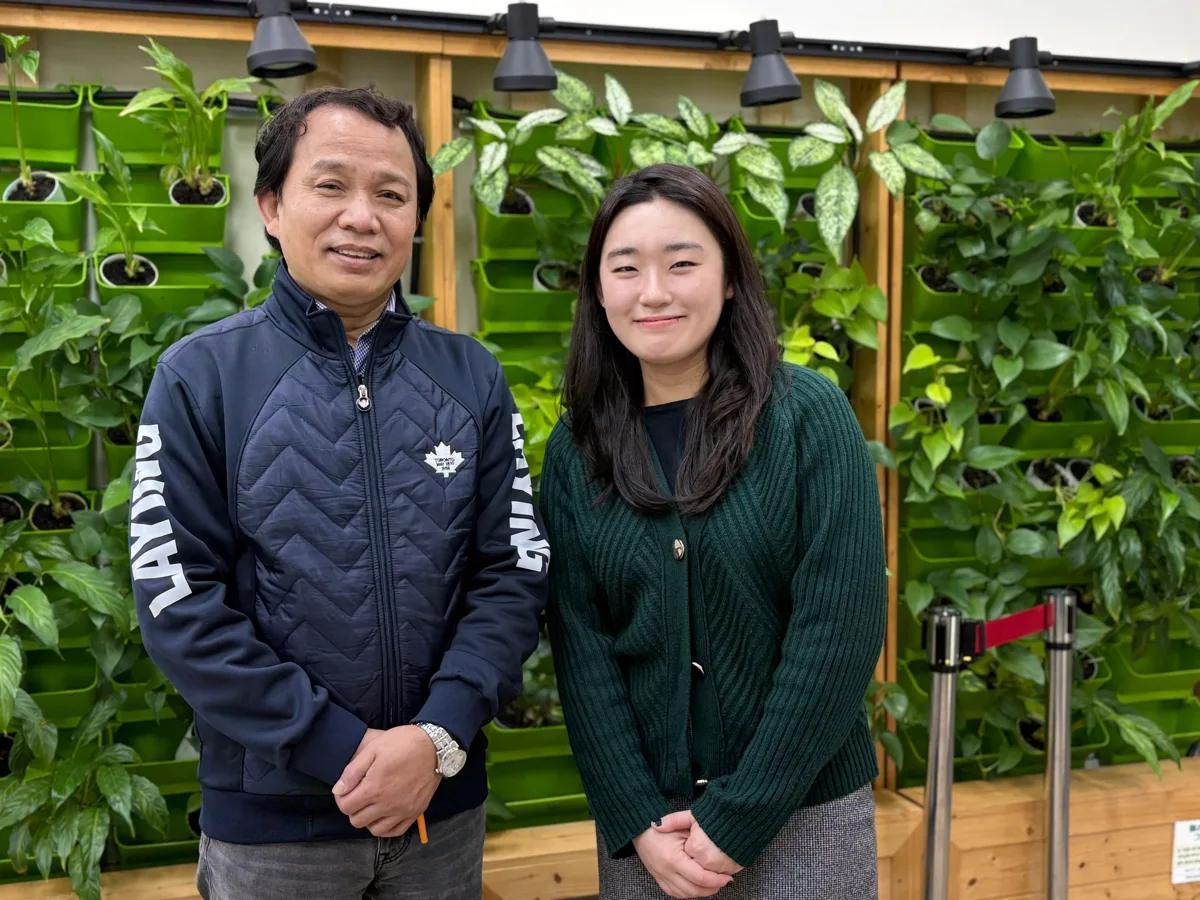
Is there anything you would like to say to migrants and refugees living in Korea?
The truth is, migrants face many difficulties while living in Korea, right? And in Korea everything is well set up, so every problem is bound to get solved. I hope you always live with hope and confidence.